My projects
The challenge of the 21st century for societies living under authoritarianism isn't the lack of brave people — it's the absence of infrastructure. Every platform I build, every dataset I compile, every space I co-found is a brick in the infrastructure of an open society that doesn't yet fully exist, but must.
A revival of Syn Bielarusa — the Belarusian-language newspaper published in Vilnia in 1924 until Polish authorities shut it down after 42 issues. Back after a 102-year break, written in classical Belarusian orthography, with English and Russian editions and the original 1924 issues republished in its archive.

An investigative platform documenting political repressions in Belarus and war crimes in Ukraine. Built and maintained independently, grounded in the principle that tolerance of aggression is incompatible with an open society. A living archive for accountability and historical memory.
A civil movement co-founded to advocate for humane and evidence-based drug policy in Belarus — challenging one of the region's most punitive and ineffective approaches to drug regulation. Building public discourse where none was allowed to exist.
A community-run creative space in Vilnius offering a home for artists, activists, and civic initiatives from across the world. Part gallery, part crypto bar, part coworking collective — hosting political seminars, film screenings, Bitcoin meetups, and concerts by independent Belarusian musicians.

A nationwide movement of young activists committed to a modern, free Belarus. Uniting those who believe in freedom, humanism, and human rights — educating, researching, and mobilizing the next generation of civic leaders. Builds platforms for political literacy, public policy training, and evidence-based advocacy, working to make self-governance and systemic change possible from within civil society.

A digital management platform for non-profit organizations and civic movements. Gives communities tools for membership management, voting, elections, activity reporting, and transparent donation tracking — making self-governance accessible to any organization, anywhere.
A movement of Belarusians united by the values of personal freedom and national identity, grounded in the belief that the individual is of the highest worth. Pursued an open society in an independent Belarus through three pillars: civic education to spread shared values, leadership development among those who hold them, and resource and infrastructure support for emerging civic leaders.
A Decade of Democratic Disruption
Ran a satirical local election campaign — using the theatre of the electoral process to expose the absence of real self-government in Belarus. Generated wide media coverage and sparked public debate about democratic legitimacy.
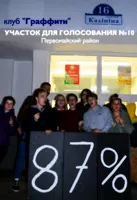
Ran the first online streaming from a polling station in Belarus, challenging official turnout figures and exposing systemic fraud to an international audience in real time.
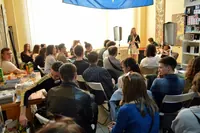
Co-organised Europe Day celebration at Art Syadziba with the Movement "For Freedom" — one of the first public Europe Day events in Belarus. Programme included the "Insurgents" game, a lecture on European integration, an EU quiz, live music (Tonya Vercinskaya, Апоўначы, ZnaROCK, Čas Łajna), and a unique postcard-sending activity. Free entry.
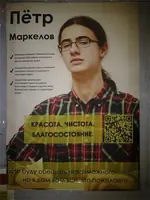
Directed the most media-visible parliamentary campaign in that election cycle, generating 200+ media appearances. Demonstrated that even in a closed political system, civic campaigns can command public attention.
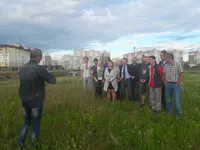
Co-organised Europe Day event on the theme of Intermarium (Міжмор'е) as a European formation — bringing the idea of Baltic-Black Sea regional integration into public discourse in Belarus for the first time. Speakers included traveller-activist Yury Zhyhimont, political analyst Aleś Łahviniec, and economist Syargej Chały. Organised by the Movement "For Freedom" and youth union "Intermarium"; live music, open discussion. Venue: loft space "Bałki", Minsk.
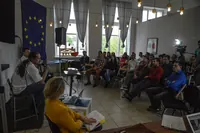
Organised a solo concert by Minsk band Čas Łajna as part of Europe Week — featuring current repertoire, guest performers, and a full hall of European spirit. Free entry. Bar ili Klub, Minsk.
Organised a solidarity and education event on the reality of short-term political detention in Belarus. Former detainee Pavel Vinogradov shared first-hand experience of life in detention, and human rights defender Nasta Loika briefed attendees on how to support friends and family held at Akrestsina detention centre — turning awareness of political repression into community and practical action.
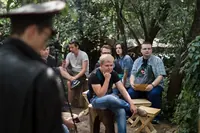
Led a Legalize Belarus research and advocacy trip to Berlin — visiting the Hanf Museum (one of the few cannabis museums in the world, in the historic heart of Berlin) and participating in Hanfparade — the annual cannabis legalisation demonstration through central Berlin, with music stages, exhibitors, and 20 years of peaceful marches.
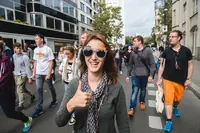
Organised a public discussion on why the war on drugs fails — covering cannabis harm and benefit, legalisation prospects in Belarus, and the situation of those convicted under Article 328. Included an overview of the Czech regulatory experience and a presentation of Legalize Belarus campaign plans. Komnata 3/0/2, Minsk.
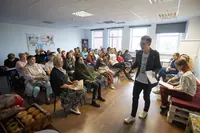
Organised a screening of the American documentary on cannabis — its role in people's lives, harms, benefits, and the mechanics of global drug trafficking. Followed by a discussion over coffee. Komnata 3/0/2, Minsk.
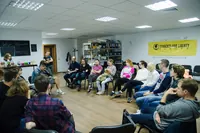
Organised and hosted a lecture on how countries have built innovative regulatory frameworks for cannabis — medical, industrial, and recreational — despite restrictive UN conventions. Focused on Uruguay, the first country to fully legalise cannabis. Speaker: Alfredo Pascal, cannabis policy expert, author of a Master's thesis on Uruguay's legalisation process, former Austrian Economics Centre (Vienna) and International Cannabis Corporation (Uruguay).
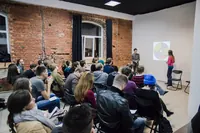
Organised an evidence-based public lecture on MDMA — its therapeutic and recreational use, effects, and risks — as part of Legalize Belarus's harm reduction literacy campaign. Gave the public access to objective information ahead of anticipated drug law reforms. Speaker: Alfredo Pascal. Komnata 3/0/2, Minsk.
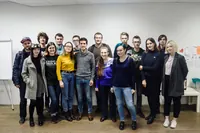
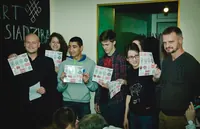
Organised a group solidarity action for those unjustly convicted under Article 328 of the Belarusian Criminal Code — the harshest drug possession law in Europe. Over 10,000 Belarusians were behind bars under this article at the time, many for minor cannabis possession. Programme: collective signing of support postcards for convicts, launch of a legislative reform petition, and open conversations with those directly affected. Sałoŭka XYZ, Minsk.
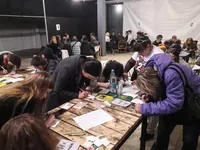
Co-organised a public workshop on the history and transformation of the Latin alphabet in Belarus, teaching participants to read and write in Belarusian łacinka. Held at Art Syadziba, Minsk.
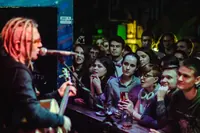
Co-organised a students-only evening at bar Grafiti timed to International Student Day (17 Nov) — rooted in the 1939 Nazi crackdown on Prague students. Musicians Lavon Volski and Syargej Bashłykevič performed and shared their student-era stories. Co-organised by Dzieja and the Union of Belarusian Students; entry by student ID only.
Organised Legalize Belarus outreach to Homel: screened the American documentary on cannabis — its role in people's lives, harms, benefits, and the causes and consequences of the war on drugs. Followed by a discussion on the cannabis situation in Belarus over coffee. Ark Space, Homel.
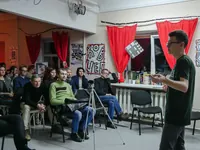
Organised a closed meeting with the French Ambassador to Belarus for participants of Aleś Łahviniec's "Euro-Integration" course. Topic: France and the European Union today. Held at "Пакой 3/0/2", Minsk.
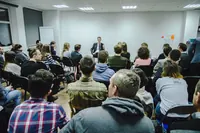
Organised a Dzieja expedition to Homel: conducted a public session on opportunities for higher education, Master's programmes, seminars, internships, exchanges, and volunteering in the European Union — helping young Belarusians navigate options and plan their path abroad. Held at art space "Kaŭčeh", Homel.
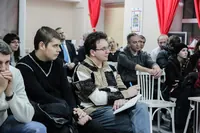
Organised Legalize Belarus outreach to Grodno: led a discussion of Belarus's war on drugs and its consequences — mass incarceration for cannabis, unchecked synthetic drugs, corruption, patients denied medical relief. Included a short cannabis documentary and a conversation about Article 328. Venue: Partal, Grodno.
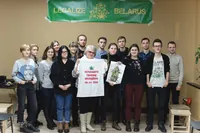
Co-organised a discussion marking the 45th anniversary of Vitali Silitski — honouring his intellectual legacy and the ideas of his final book The Long Road from Tyranny. Speakers: Pyotr Rudkouski (BISS), Uladzimer Mackievič (EuroBelarus), Aleś Łahviniec (Dzieja). Moderated by Valer Bułhakaŭ (ARCHE). Co-organised by Dzieja and Students For Liberty Belarus at Press Club Belarus, Minsk.
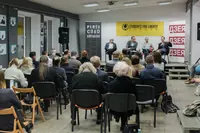
Organised Legalize Belarus outreach to Mogilev: led a discussion of Belarus's war on drugs, a short cannabis documentary, and a conversation about Article 328. Conference hall of the Gubernskaya Hotel, Mogilev.
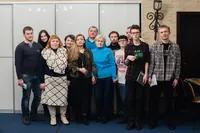
Organised a year-end community solidarity gathering: collective signing of support postcards for Article 328 convicts, launch of a petition for legislative reform, and educational activities on industrial hemp and its legal status. Komnata 3/0/2, Minsk.
Organised Legalize Belarus outreach to Brest: led a discussion of Belarus's war on drugs, a short cannabis documentary, and a conversation about Article 328. Prastora KH, Brest.
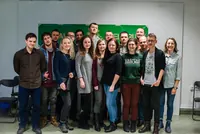
Organised a Dzieja outreach to Babruysk: delivered a public lecture on civic engagement, the meaning of an active civic position, why defending rights matters, and what forms of participation are possible under an authoritarian regime. Co-organised with local United Civil Party (АГП) chapter.
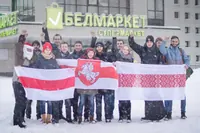
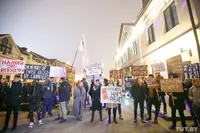
Organised the first sanctioned public rally on drug policy reform in Belarus — demanding repeal of criminal punishment for possession of controlled substances in small quantities, held within the pre-election agitation campaign of a candidate for the Minsk City Council. Universam Tsentralny, Minsk.
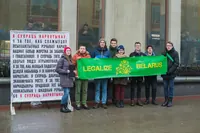
Organised Legalize Belarus outreach to Vitebsk: led a discussion of Belarus's war on drugs in global context, the nature of addiction, and why calling people "addicts" ("narkamany") is a form of hate speech. Over 15,000 Belarusians were imprisoned under drug legislation at the time, most for possession of small quantities. Beatles Club, Vitebsk.
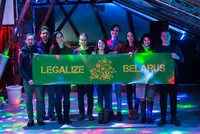
Organised a training for journalists, activists, and the public on hate speech toward drug users and people with addiction disorders — why terms like "drugs" and "addicts" require care, and how to speak and write accurately about Article 328, psychoactive substances, and addiction. Held during the Week Against Racism, Discrimination and Hatred. Press Club Belarus, Minsk.
Organised an outdoor Europe Day gathering outside Minsk — a civic alternative to Victory Day military parades. The centrepiece was an open-format conference where each participant prepared a short talk or interactive session on peace, human rights, or freedom — from disarmament to European affairs. For participants' safety, the location was disclosed only to vetted registered attendees.
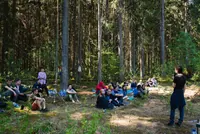
Organised a public quiz event timed to Europe Day (9 May), testing knowledge, logic, and intuition on European topics. Held at Art Syadziba, Minsk — part of a broader week of civic events building European awareness and identity among young Belarusians.
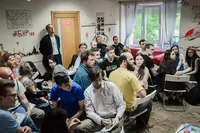
Organised a panel discussion on Václav Havel and the defining power of moral choice in favour of democracy and Europe, timed to Europe Day. Speakers included the Deputy Ambassador of the Czech Republic and the Director of the Belarusian Institute for Strategic Studies. Moderated by Aleś Łahviniec. Focus: comparative Czech and Belarusian experience of resistance and transformation.
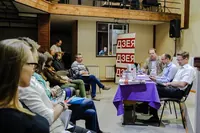
Organised a closed meeting with Ambassador of Lithuania to Belarus Andrius Pulokas for students of Aleś Łahviniec's "Euro-Integration" course, timed to Europe Day. Topic: benefits and challenges of Lithuania's EU membership — 14 years on. Participants put direct questions to the Ambassador at the Lithuanian Embassy in Minsk.
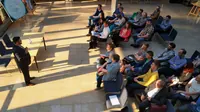
Organised the legally sanctioned one-year anniversary event of the Legalize Belarus campaign — a music event engaging young audiences with the drug policy reform agenda, built around the principles of peace, love, unity, and respect.
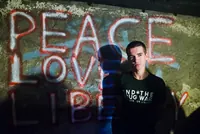
Organised a practical training for civic activists on what to do when detained, questioned, or searched — rights during detention and investigation, what not to say, and how to avoid worsening one's situation. Featured human rights defender Nasta Łoika, Article 328 expert Marina Matsulevich, and candid conversation with Belarusian political prisoners Pavel Vinogradov and Vyachaslav Kasinerov.
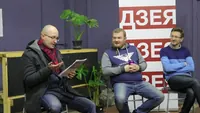
Organised the closing Legalize Belarus event of 2018, featuring economist Yaraslau Ramanchuk presenting on expanding producer and consumer freedom as part of a GDP growth strategy for Belarus. Presented the movement's hemp merchandise collection supporting its advocacy work. Press Club Belarus, Minsk.
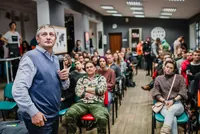
Organised an educational lecture on the most common psychoactive substances in Belarus: their history, psychophysiological effects, potential negative consequences, and harm reduction practices that can minimize side effects and save lives in the event of overdose or a bad trip. Free entry by registration. Homel.
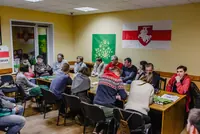
Organised an educational lecture on psychoactive substances in Belarus — their effects, risks, and harm reduction practices that can minimize side effects and save lives in the event of overdose. Beatles Club "Cherdachok", Vitebsk.
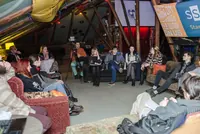
Organised a lecture and discussion on drug feminism — how the war on drugs has affected and continues to affect women, and how to build and mobilize female resources to end it. Speakers: Anya Sarang (President, Andrei Rylkov Foundation, Moscow) and Maxim Malyshev (FAR street social work coordinator). Covered Russian harm reduction advocacy experience and alternatives to prohibition. Minsk (venue shared with registered participants only).
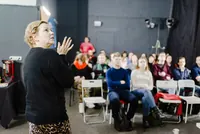
Organised a lecture on German drug law and its enforcement, stakeholder positions, and possible future reforms. Speaker: Daniel George, Executive Director of the FDP group on Hagen City Council. Falanster, Minsk. Lecture in English.
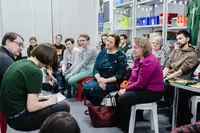
Organised Legalize Belarus outreach to Mogilev: delivered a lecture on the most common psychoactive substances in Belarus — their history, psychophysiological effects, potential negative consequences, and harm reduction practices that can minimize side effects and save lives in the event of overdose. Gubernskaya Hotel, Mogilev.
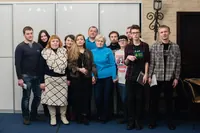
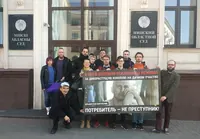
Organised a solidarity action at the Minsk Regional Court appeal hearing of Uladzislau Vakulchyk — sentenced to 9 years strict-regime for possession of technical hemp (low-THC cannabis, not punished anywhere in Europe). Led supporters outside the courthouse on Sverdlova St. to demand justice and draw attention to Belarus's disproportionate drug sentencing.
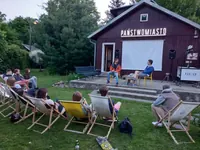
Co-organised an outdoor film screening and discussion evening in Warsaw with Społeczna Inicjatywa Narkopolityki (SIN) and Students For Liberty. Programme: a guided tour of the Legalize Belarus photo exhibition, the short film "To się Wcale Nie Skończy", a presentation on life in Belarus, a documentary on drug policy under Lukashenko, and a post-screening Q&A. Explored how young people live and socialise in Europe's last dictatorship and why psychoactive substances drove over 15,000 people into Belarusian prisons. Domek fiński "PM na Trawie", Jazdów 3/12, Warsaw.
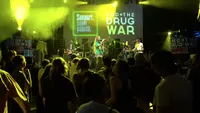
Organised a music festival at Re:Public club in support of the global "Support. Don't Punish" campaign — reclaiming 26 June from its former identity as an anti-drug propaganda day. Performers: МУТНАЕВОКА, Botanic Project, Čas Łajna, Kitchen Stuff Only. Free entry with ticket. Re:Public, Minsk.
Co-founded Youth Bloc — a nationwide movement of young Belarusian activists striving to build a free, lawful, and modern Belarus. Founded in autumn 2019 to field candidates for the Belarusian Parliament, Youth Bloc grew into an open membership organisation united by a shared belief in freedom, humanism, and human rights. It educates, researches, and mobilises the next generation of civic leaders, building platforms for political literacy, public policy training, and grassroots organising. Vita sine libertate nihil est.
Organised a Legalize Belarus Research Service screening of the documentary on Alexander "Sasha" Shulgin — the chemist behind over 200 psychedelics including MDMA, considered one of the greatest chemists of the 20th century. The film follows his life and the scientists who worked alongside him, their discoveries, motivations, and belief that their work would unlock the complexity of the human mind. Followed by discussion. Experimental Space 1955, Minsk.
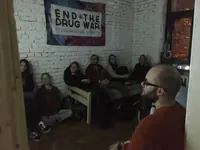
Moderated panel at Press Club Belarus bringing together experts and candidates for the House of Representatives to debate how decriminalising Article 328 could affect Belarusian society. Panellists: Stas Shashok (Legalize Belarus communications coordinator, lawyer, parliamentary candidate), Syargej Chały (economist, journalist), Larysa Zhyhar (parliamentary candidate, leader of the "Mothers 328" movement), and Ihar Brek (lawyer, former advocate). Moderated by Anton Ruliou (Press Club) and Zmitser Lukashuk (Euroradio). Press Club Belarus, Vera Khoruzhey St. 3, Office 601, Minsk.
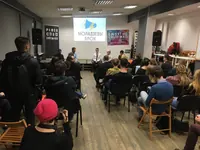
Organised a four-day offline training for young Belarusian activists, journalists, experts, and anyone interested in drug policy and working with vulnerable groups. Over four days, participants explored the history of the struggle for humane drug policy in Belarus, deepened their understanding of psychoactive substances (PAS) across countries, learned about substances and addiction, legislative regulation, support programmes, and international activism — and developed their own campaign plan for decriminalisation and humane drug policy under authoritarian conditions. Organisers covered travel costs and provided visa support. Poland, 15–19 June 2022.
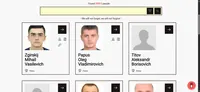
Launched luka.zone — an investigative portal documenting individuals responsible for political repressions in Belarus and war crimes in Ukraine, built as part of the National Liberation Movement "Para!". At launch, the database contained information on approximately 5,000 individuals compiled from civic initiative lists, open sources, and OSINT tools. The portal enables search by name, phone number, email, and personal identification number, with full database dumps available in machine-readable format. Funded personally with over 10,000 EUR and hundreds of hours of development work.
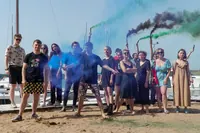
Organised a three-day training for anyone interested in drug policy and working with vulnerable groups. Participants explored the history of the struggle for humane drug policy in Belarus, deepened their understanding of psychoactive substances (PAS) across countries, and learned more about substances and addiction, legislative regulation, support programmes, and international activism. Organisers covered travel, food, and accommodation costs. Lithuania, 19–22 January 2023.
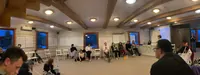
Spoke at a gathering of the Lithuanian, Ukrainian, and Belarusian drug advocacy scene, sharing progress and discussing obstacles faced across the region. Eastern Europe remains the most challenging and restrictive region in Europe when it comes to drug laws and access to novel psychoactive medicines — yet NGOs continue to push the envelope of drug policy reform despite state repression, ongoing conflicts, and lack of funding. Piotr Markielau (Legalize Belarus) and Viktoriya Wolotko (Belarusian national, member of the strategic board of the Ukrainian Psychedelic Research Association) presented a united voice for the region and built a bridge of mutual support between communities. Moderated by independent media organisation NARA. Held in English. Vilniaus g. 22, Vilnius, Lithuania.
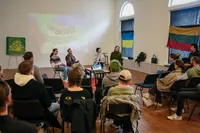
Organised a five-day offline event in Lithuania bringing together the best Belarusian experts in economics, politics, and entrepreneurship. Participants gained theoretical and practical knowledge for developing and implementing their own projects. The camp targeted active Belarusian students and graduates regardless of their place of study or current residence — anyone committed to the economic revival of Belarus. Participation was free; organisers covered transport, accommodation, food, and offered visa support. Lithuania, 31 August – 4 September 2023.
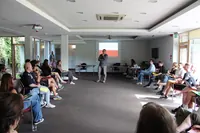
Organised an educational and activist programme uniting Belarusians to study the current state of drug policy and work towards improving it. Participants explored various aspects of drug policy — from foundational concepts around psychoactive substances and their effects on the human body to analysis of advocacy strategies and the international regulatory framework for PAS. Open to Belarusian activists, journalists, doctors, lawyers, and anyone wishing to contribute to the advancement of humane drug policy in Belarus. Organisers covered travel, accommodation, and food costs, and provided visa support for participants from Belarus. Lithuania, 9–13 May 2024.
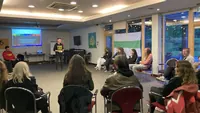
Organised a gathering of humane drug policy advocates in Vilnius — an enlightening discussion on drug checking as a harm reduction approach, crucial to enhancing public health and safety. The event featured presentations and interactive workshops on the benefits and challenges of drug checking, the role of law enforcement, service accessibility, and technological advancements. Jerzy from protestkit.eu presented the technology involved, and special guests from baltictests.lt demonstrated how to test THC and cocaine purity and presence. 50 free single-use test kits were distributed among participants. Organised by Legalize Belarus and Jauna Banga. Vilnius.
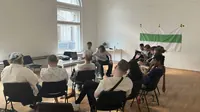
Launched the ZOLAK residency for cultural work and leisure in Vilnius. The full-day opening programme included workshops on Bitcoin Lightning and Belarusian history, a film screening, live concerts by Belarusian musicians, and an evening electronic music programme. Free entry by donation. ZOLAK Micro Art Residence, Vytenio g. 50D, Vilnius.
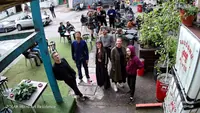
Launched Radio Zolak — an online radio station broadcasting Belarusian music exclusively. A dedicated platform for Belarusian artists and listeners, keeping the language and culture alive across the diaspora and beyond.
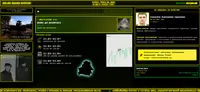
Became a member of the Coordination Council — the representative body of democratic forces and civil society organisations of Belarus, uniting independent civic activists, civil initiatives, associations, trade unions, political parties, charitable foundations, and other non-profit organisations with the aim of establishing democratic governance in Belarus, founded on the primacy of inalienable and universally recognised human rights, the rule of law, and the preservation of Belarusian sovereignty and independence. The Council's III convocation was formed with a two-year mandate through elections held in May 2024.